
 Shop
Shop Acoustic Foam
 Acoustic Curtain
 Ceiling Acoustics
 E-POD
E-POD Wall Acoustics
 Floor Acoustic
 Acoustic Homez™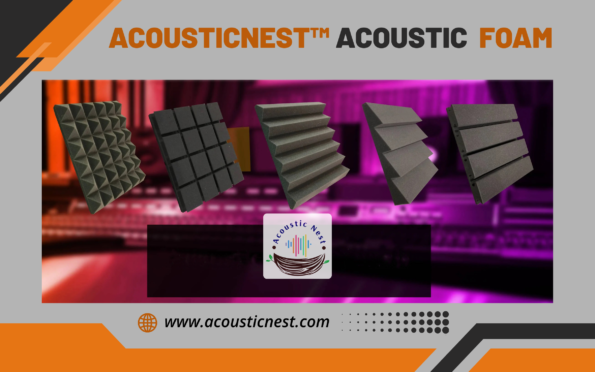
Noise control has become an important requirement in modern buildings, industrial facilities, offices, and entertainment spaces. Excessive echo and poor sound quality can affect productivity, communication, and comfort. Acoustic Foam is a widely used acoustic treatment material designed to manage sound within enclosed spaces. To use it effectively, it is important to understand what acoustic foam is and how it functions.
Understanding Acoustic Foam
Acoustic Foam is a lightweight, porous material specifically developed to absorb sound waves and improve indoor acoustics. It is usually made from open-cell polyurethane or melamine foam, allowing sound to pass into the material instead of reflecting off surfaces. Acoustic foam panels are manufactured in various profiles such as wedges, pyramids, egg crates, and geometric patterns to increase surface area and enhance sound absorption.
It is important to note that Acoustic PU Foam is not meant to block noise from entering or leaving a room. Instead, it improves the sound environment inside the space by reducing echo, reverberation, and sound distortion. This makes it an essential component of acoustic treatment rather than soundproofing.
How Acoustic Foam Absorbs Sound
Sound travels in the form of waves that bounce off hard surfaces like concrete walls, glass, metal panels, and ceilings. These reflections cause echoes and amplify noise levels. Acoustic foam works by absorbing these sound waves before they can reflect back into the room.
The open-cell structure of acoustic foam allows sound waves to penetrate deep into the material. As the waves travel through the foam, they lose energy due to friction and air movement within the pores. This sound energy is then converted into a small amount of heat, reducing the strength of reflected sound. As a result, the room experiences clearer audio, lower noise levels, and improved speech intelligibility.
Acoustic foam performs best in absorbing mid and high-frequency sounds such as voices, music, equipment noise, and ambient disturbances. Using thicker panels and correct placement can further enhance overall acoustic performance.
Advantages of Using Acoustic Foam
One of the main advantages of acoustic foam is its ability to significantly improve sound clarity without major structural modifications. It is easy to install, lightweight, and available in fire-retardant grades suitable for commercial and industrial use.
Acoustic foam also helps create a more comfortable environment by reducing listening fatigue and improving concentration. Compared to heavy soundproofing systems, it offers a cost-effective solution for managing internal noise problems.
Where Acoustic Foam Is Commonly Used
Acoustic foam is widely installed in recording studios, home theatres, conference rooms, call centres, classrooms, control rooms, generator rooms, and power plants. In industrial settings, it helps reduce sound reflections from machinery and enhances workplace safety and communication.
Acoustic PU Foam plays a vital role in improving indoor acoustic quality by absorbing sound waves and reducing unwanted reflections. While it does not block noise transmission, it significantly enhances sound control within a space. When properly selected and installed, acoustic foam creates a quieter, clearer, and more efficient acoustic environment for commercial, residential, and industrial applications.